Posts

Showing posts with the label 𝟮-𝘆𝗲𝗮𝗿-𝘄𝗮𝗿𝗿𝗮𝗻𝘁𝘆

The best NVMe SSDs you can buy

Image
SSDs are much more robust and less prone to failure than HDDs due to the fact that they don’t have any moving parts. They also offer faster read and write speeds, which makes them ideal for creative professionals who need speedy access to their files for a more seamless creative workflow. SSDs come in various forms, too,Which one you chose will depend on how you intend to connect it to your device. Most come with external drivers that connect via USB, but you can also get internal models that come as cards or sticks. You’ll need to check your device and/or motherboard to know which SSDs can be supported. To speed up your writes and reads, you need a speedy SSD.  Learn more here  https://www.ankmax.com/newsinfo/2543152.html

Difference Between USB 4 and Thunderbolt 4

Image
As mentioned earlier, a Thunderbolt 4 cable is also a USB 4 cable but all USB 4 cables are not certified as Thunderbolt 4  Both USB 4 and Thunderbolt 4 use the same USB Type-C connector which is reversible and rounded. The USB 4 is also based on the very same underlying protocol as Thunderbolt 4, and both types are tightly connected. All thunderbolt devices come with USB 4 support which means if you have a device with Thunderbolt 4 connectors you can use USB 4 cables. However, not all the devices with USB 4 connectors will be as powerful as the ones that are fully Thunderbolt 4 certified. For example, Apple offers Thunderbolt 4 in many devices that offer the maximum bandwidth of 40 GB/s. But many Windows computers come with USB 4 but offer a maximum bandwidth of 20 GB/s. Additionally, if you have a laptop with a Thunderbolt 4 connector, you will be able to connect two 4K displays with it. On the other hand, a device with a USB 4 connector will allow you to connect only one 4K displ...

What is USB 4 ?

Image
USB 4 is the latest specification or version of USB that’s housed within the USB Type-C cables. It takes over from USB 3.2 and 3.0 and offers either 40 GB/s or 20 GB/s of data transfer speed. Just like Thunderbolt 4, it uses the same Type-C reversible and rounded connector. A thunderbolt 4 cable can also be called a USB 4 cable but the opposite is not true because not all USB 4 cables are Thunderbolt 4 certified. Being the latest version, USB 4 is more efficient and faster than any other version of USB. It can monitor the bandwidth requirements dynamically for all the connected monitors or displays and allows you to save the remaining bandwidth at the same time for data transfer. It was not possible in any earlier version of USB as they straightforwardly split the bandwidth into two parts for data and display. Just like Thunderbolt 4, USB 4 can also support PD up to 100W and it also offers backward compatibility with Thunderbolt 3, USB 2.0, USB 3.0, USB 3.1, and USB 3.2. A cable with U...

Thunderbolt 3 vs Thunderbolt 4

Image
All manufacturers need to make sure that they offer the top specifications of Thunderbolt 4 in order to be certified as Thunderbolt 4 by Intel officially. Thunderbolt 4 also supports any USB Type-C monitor with a resolution of up to (7,680 x 4,320) 8K. It means you can use Thunderbolt 4 USB Type-C cable which is much thinner than HDMI or DisplayPort cable to power your high-resolution displays. Additionally, unlike video cables, you can also use a Thunderbolt 4 cable to transfer data and charge devices. Features of Thunderbolt 4 · Offers 40 GB/s bandwidth. · Can support one 8K monitor or two 4K monitors. · Comes with PCIe at 32 GB/s for up to 3,000 MB/s data-storage speeds. · Offers up to 100-watt PD (Power Delivery) charging. · Has support for docks with up to 4 ports. · Allows you to wake your laptop or computer by moving the mouse or pressing a keyboard key if connected with a Thunderbolt 4 dock. · Comes with Intel VT-d DMA (Direct Memory Access) protection that offers protection ag...

Thunderbolt 4とは何ですか?

Image
Thunderboltは、IntelによるThunderboltラインの最新バージョンです。USB Type-C およびThunderbolt 3との下位互換性を含むさまざまな利点があります。Thunderbolt 4 認定のすべてのケーブルは、USB 2.0、USB 3.1、USB 3.2、およびUSB 4を含むすべてで動作します。 Thunderboltは、40 GB / sのデータ転送速度と100WPD(Power Delivery)電力を高速充電で提供します。Thunderbolt 3も同じ仕様を提供していることに注意することが重要です。ただし、いくつかの違いがあり、一部のラップトップとWindowsコンピューターはカットダウンバージョンを使用していました。   詳細はこちら   https://www.ankmax.com/newsinfo/2461471.html

What is Thunderbolt 4?

Image
Thunderbolt is the most recent version of the Thunderbolt line by Intel. It comes with a range of benefits including backward compatibility with USB Type-C and Thunderbolt 3 . All the cables that are Thunderbolt 4 certified can work with everything including USB 2.0, USB 3.1, USB 3.2, and USB 4 . Thunderbolt offers a data transfer speed of 40 GB/s and 100W PD (Power Delivery) power with fast charging. It’s important to note that Thunderbolt 3 also offers the same specifications. However, there are some differences, and some laptops and Windows computers used cut-down versions.   Learn more here https://www.ankmax.com/newsinfo/2461471.html

USB 4とThunderbolt 4:相違点と類似点

Image
Thunderbolt 4 テクノロジーの発売後、適切なThunderboltコンピューターとデバイスおよび USB-Cケーブルの選択が非常に簡単になりました。   最高のケーブルが必要な場合は、 Thunderbolt 4 ケーブルを購入する必要があります。 これは、 U   SB-Cを搭載したUSB 4にも当てはまります。 USB4 とThunderbolt 4 の最も優れている点は、どちらもすべてとの下位互換性を提供することです。 これらの仕様のケーブルやデバイスを購入すると、将来を見据えたメリットもあります。     詳細はこちら   https://www.ankmax.com/newsinfo/2461471.html

USB 4 vs Thunderbolt 4 : Differences and Similarities

Image
Choosing the right thunderbolt computers and devices and USB-C cable has become very easy after the launch of Thunderbolt 4 technology. If you want the absolute best cable, you should buy a Thunderbolt 4 cable and the same is true for USB 4 with USB-C. The best thing about USB 4 and Thunderbolt 4 is that both offer backward compatibility with everything. Buying cables and devices with these specifications also comes with the benefit of future-proofing.   Learn more here https://www.ankmax.com/newsinfo/2461471.html

How Does SSDs Work?

Image
  We’ve often discussed the difference between different types of NAND structures — vertical NAND versus planar, or multi-level cell (MLC) versus triple-level cells (TLC) and quad-level cells (QLC). Now, let’s talk about the more basic relevant question: How do SSDs work in the first place, and how do they compare with newer technologies, like Intel’s non-volatile storage technology, Optane? Learn more here  https://www.ankmax.com/newsinfo/1968117.html

ANKMAX P631HGを入手したとき、あなたは何を持っていますか?

Image
· 5Gbps高速USB3.1Gen1ポート · 4K 60Hz HDMIポート · Type-C USBポート · USB-C PD 60Wポート · 1Gイーサネットポート 要するに、生産性を高め、コンピューターのパフォーマンスを向上させるために必要なすべてのクールで必要なもの。

Think you know a more advanced and cheaper USB-C multiport adapter?

Image
Think harder... Thanks to its six optimized ports, ANKMAX P631HG allows you to connect 4K HDMI video output, USB Type-C port, 1GB Ethernet port, and an USB PD 60W to your laptop. ANKMAX P631HG is the lightweight, portable, and high-speed USB-C multiport adapter solution you are looking for.

Back Up Your Data (and Free Up Space, if Necessary)

Image
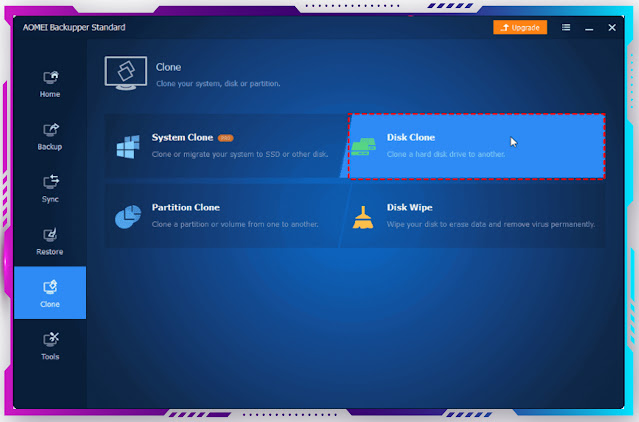
Click Next, then click on your SSD to select it as the destination disk—again, be very careful you're selecting the right disk here, since it will be erased and overwritten—and click Next again. Even if your SSD is smaller than your current hard drive, AOMEI will resize the volume to fit. You shouldn't run into trouble unless your source drive contains more data than can fit on the new SSD. Finally, you'll be given a summary of the upcoming operation, which you can double-check one last time. Check the SSD Alignment box along the bottom, which ensures you're getting the best performance from your SSD, and click the Start Clone button. Learn more here https://www.ankmax.com/newsinfo/1702435.html

What You'll Need: AOMEI Backupper for Windows

Image
There are many different drive-cloning tools on the market, but when cloning a hard drive to SSD, I recommend AOMEI Backupper, since it's free, easy to use, and takes into account a few quirks that sometimes pop up during clones from hard drives to SSDs. The free Standard version is fine; there's no need to upgrade to the paid version for what we're doing today. You will need to enter your email and subscribe to the newsletter to get the download link, though. Thankfully, you can just unsubscribe later. Once you've gathered up those necessities, it's time to get started. Learn more here https://www.ankmax.com/newsinfo/1702435.html

必要なもの:USBからSATAへのクローンドック

Image
2.5または3.5インチHDD、2.5インチSSDに適した、ハードディスクコピークローニング機能を備えたハードディスククローニングデバイス、USB3.0からSATAへのデュアルハードディスククローニングデバイスをお勧めします。このプロセスでは、SSDと古いハードドライブをコンピューターに接続する必要はありません。ハードドライブをクローンベースに挿入するだけです。SSDは、最大400MB / Sのオフラインクローン作成をサポートします。ドライバーは不要で、インストールも簡単です。オフラインクローン作成は、ソースディスクからターゲットディスクへのクローン作成であり、ターゲットディスクの容量がソースディスクの容量以上であることを保証します。 詳細はこちら https://www.ankmax.com/newsinfo/1702435.html

What You'll Need: A USB-to-SATA Clone Dock

Image
Recommend a hard disk cloning device, USB 3.0 to SATA dual hard disk cloning device, with hard disk copy cloning function, suitable for 2.5 or 3.5 inch HDD, 2.5 inch SSD. During this process, you don't need to connect the SSD and the old hard drive to the computer, just insert the hard drive into the clone base. SSD supports offline cloning up to 400MB/S. No driver is required and installation is simple; offline cloning is from the source disk to the target disk, ensuring that the capacity of the target disk is greater than or equal to the capacity of the source disk. Learn more here  https://www.ankmax.com/newsinfo/1702435.html

What You'll Need: An SSD

Image
Obviously, in order to upgrade to an SSD, you'll need to, well, buy an SSD. We have some recommendations here, though if you're on a pretty strict budget, we have a separate list of cheap SSDs as well. Make sure to buy the right form factor for your computer (some laptops will use 2.5-inch drives, while others might use M.2 or mSATA drives), and get one big enough to fit all your data. If you have a 500GB hard drive now, you should probably spring for a similarly sized SSD (or larger, to accommodate for future data). The only exception is if you're on a desktop computer and have room for multiple hard drives. In that case, you could store Windows and your programs on the SSD while putting your music, movies, and other media on a second, larger hard disk. Learn more here https://www.ankmax.com/newsinfo/1702435.html

Price: SSD vs HDD

Image
Price: SSD vs HDD SSDs are more expensive than HDDs — about twice as expensive per gigabyte — and that isn't likely to change anytime soon, though SSD prices have come down in recent years. The raw materials for SSDs cost more for the manufacturer, and the device’s construction is much more complex.  HDDs contain one uniform slab of metal, where storage space is constrained only by how large the surface area is or how small you can write.  When you consider that these transistors are being shrunk down to ever more microscopic sizes, it’s pretty incredible that SSDs are only twice as expensive per gigabyte as HDDs.  Another factor that inflates prices is demand: many people simply don't need SSDs. When demand is low, manufacturers don't have to race to provide the required supply or to price it more competitively. Thus, SSD vs HDD price per GB is roughly stable. Keep in mind that cheap SSDs are often poorly made. Steer clear of unrecognizable or untrustworthy manufacturers...

Reliability: SSD vs HDD

Image
Are SSD drives more reliable than HDDs? Actually, SSD technology is now about equally as reliable as your typical HDD. One effect of the rise of streaming is that most of us no longer store huge amounts of data in the form of music or movies on our drives, a situation in which SSDs thrive. SSDs are made to handle daily workloads with frequent reading and writing, rather than being filled with files that go untouched for years at a time. In other words, reliability is an SSDs most useful asset. SSDs have come a long way. New optimization techniques such as TRIM and wear-leveling prioritize performance and keep the individual storage cells from getting worn out. If you’re used to an HDD, you won’t notice any reliability issues when moving to an SSD — only the benefits. But regular PC maintenance is still needed to speed up and clean up your PC, and to keep your SSD in good shape. That’s one thing that hasn’t changed since the days of HDDs and the CHKDSK command or disk defragmentation. W...

速度:SSDとHDD

Image
ソリッドステートドライブは、ハードディスクドライブよりも最大10倍速く読み取り、最大20倍速く書き込みます。これらも範囲外の数値ではありませんが、各クラスのミッドレンジドライブの速度です。また、速度の違いは、コンピューターのマザーボードがPCIe3.0から4.0コネクタに進むにつれて大きくなると予想されます。 SSDはHDDよりもはるかに高速に動作するため、ドライブとコンピューターのマザーボード間の接続である新しいインターフェイスを考案して、フルパワーを発揮する必要がありました。彼らは以前、ハードディスクドライブが最高の地位を占めていた時代からの引き継ぎであるSATAインターフェースを利用していました。これにより、HDDをSSDに簡単に交換できるようになりました。これは、ソリッドステートドライブへの移行に必要なステップでした。 最近、ソリッドステートドライブは、Intel、Sandisk、およびその他の主要メーカーによって共同開発された新しいタイプのSSDインターフェイスであるNVMeのおかげで、常に意図されたとおりに機能することができます。古いSATAドライブでは、1つのチャネルに沿ってのみ情報を転送できますが、NVMeは、同時に読み取りと書き込みが可能な複数のチャネルを利用します。 これにより、NVMeドライブはSATAドライブよりもはるかに高速にデータの読み取りと書き込みを行うことができます。      • 一般的なHDDでは、映画やグラフィックデザインプロジェクトなどの大きなファイルのコピーは、15〜30 MB / sの比較的歩行者の速度で行われます。SATASSDは同じファイルを500MB / sでコピーできますが、新しいNVMeSSDは3,500MB / sの速度に達します。これは毎秒3.5GBです。あるドライブから別のドライブにデータをバックアップする場合は、SSDを使用するとはるかに高速になります。      • SSDドライブは、はるかに高速で小さな読み取り/書き込み操作も実行するため、コンピューターの応答性が大幅に向上します。プログラムを開いたり、Webを閲覧したりするなど、ほとんどの通常のコンピュータータスクでは、オペレーティングシステムが4KBのグループの小さなデータの束にアクセスする...

SSD or HDD: Which Is Right for You?

Image
Solid state drive vs hard disk drive is a dilemma you’re likely to face when reviewing a line of new computers or laptops. Why do SSDs come in smaller sizes? Are SSDs better suited for personal use or professional use? In what areas do they excel? Luckily, the decision between an SSD vs HDD doesn’t have to be a hard one. Learn more here  https://www.ankmax.com/newsinfo/1632698.html